SciMed
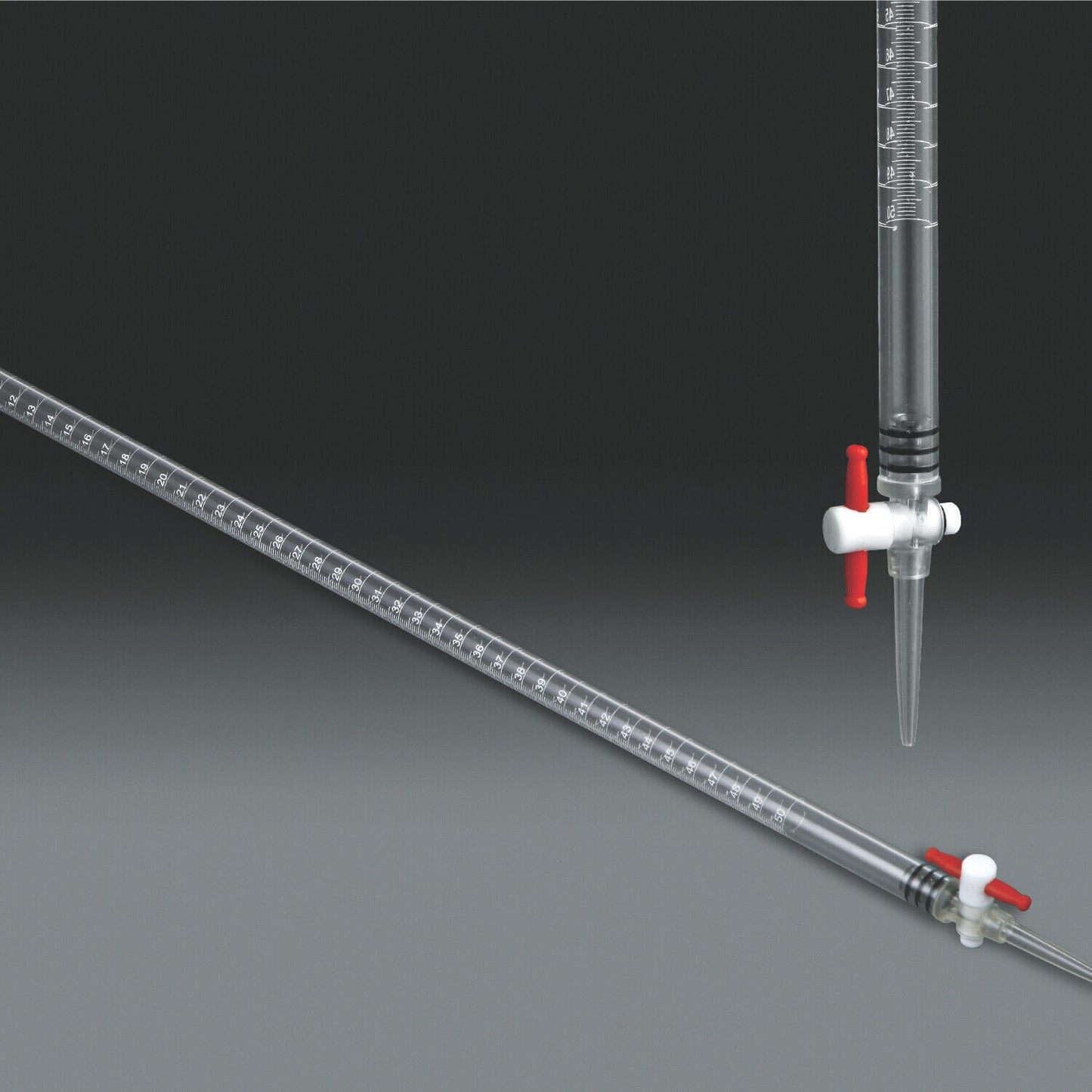
Burette — TPX Plastic, 25–100 mL, Individually Calibrated
Burette — TPX Plastic, 25–100 mL, Individually Calibrated
Couldn't load pickup availability
Individually-calibrated TPX plastic burette for analytical titration, chemistry teaching, and quality control labs — with PTFE stopcock for leak-proof precision and glass-alternative durability that doesn't shatter when dropped. Transparent acrylic (Polymethyl methacrylate / TPX) body, 0.1 mL graduation, self-lubricating PTFE plug in the stopcock. Each burette is individually calibrated at manufacture for maximum volumetric accuracy. Compatible with dilute mineral acids/bases pH 1-14 (up to 5% w/w acids or 30% w/w bases). $99 per burette (any size — 25 mL / 50 mL / 100 mL). PolyLab brand, sourced through SciMed.
Variant selection
| Variant | Best for | Price |
|---|---|---|
| 25 mL | Micro-titration, small-volume analytical (rare in undergraduate; common in research) | $99 |
| 50 mL | Standard analytical + undergraduate teaching workhorse (the most-used size) | $99 |
| 100 mL | Larger titrations, industrial QC, water quality COD/BOD titration | $99 |
TPX plastic vs glass burette — which do you need?
TPX plastic (this burette) = shatter-proof (no glass-shard cleanup), lighter, doesn't break when a student knocks over the retort stand. Compatible with dilute acids + bases pH 1-14. Not compatible with organic solvents (dissolves acrylic) or Hydrofluoric acid / concentrated Ammonium Hydroxide. Glass burette = chemically universal (compatible with organic solvents), harder scratch-resistant surface for repeated cleaning. But fragile, expensive to replace after breakage. For undergraduate teaching + water quality + acid-base titration, TPX wins on cost + safety. For organic chemistry titration or research where organic solvents are used, use glass.
Applications
- Undergraduate chemistry teaching — acid-base titration (the classic quantitative analysis experiment)
- Analytical chemistry QC — Karl Fischer moisture titration, redox titration, complexometric titration
- Water quality testing — alkalinity + hardness + chlorine titration (municipal water labs)
- Environmental analysis — waste water COD (dichromate) + BOD (Winkler) titration
- Pharmaceutical QC — API assay by titration (per USP <541> methodologies)
- Food + beverage QC — acidity titration (dairy, wine, juice)
- High school + community college chemistry — safer alternative to glass in teaching labs
- Field water testing kits — portable + drop-safe titration equipment
Specifications
| Material | Polymethyl methacrylate (PMMA) / TPX plastic — transparent, chemical-resistant to acids + bases |
|---|---|
| Graduation | 0.1 mL (standard analytical resolution) |
| Stopcock | PTFE (Teflon) with self-lubricating plug + retaining O-ring |
| Calibration | Individually calibrated at manufacture (each burette tested) |
| pH compatibility | pH 1-14 · up to 5% w/w acids · up to 30% w/w bases |
| NOT compatible with | Hydrofluoric acid · Ammonium Hydroxide · organic solvents (alcohols, ketones, chlorinated solvents) |
| Cleaning | Mild soap or detergent solution · NO acid cleaning solutions · NO wire brushes |
| Included | Burette · PTFE stopcock (pre-installed) · retaining O-ring |
Care instructions
- Do NOT expose to organic solvent or alcohol — acrylic body will craze / dissolve
- Always clean with mild soap or detergent solution + warm water
- Avoid acid cleaning solutions (chromic acid, aggressive acid mixtures)
- NO wire-handled brushes — scratches the acrylic wall + affects clarity/reading
- PTFE stopcock removal: squeeze retaining O-ring gently + slip the plug off for cleaning; reassemble with the O-ring aligned
- Rinse thoroughly after each use to prevent titrant crystallization inside the stopcock
Best for
- Undergraduate + high school + community college chemistry teaching labs (safer than glass)
- Water quality + environmental testing labs
- Pharmaceutical + nutraceutical QC labs
- Food + beverage QC labs
- Field water testing NGOs + agencies (drop-safe)
- International DDP lab procurement (breakage-loss reduction in shipping)
Buying for a teaching lab or QC facility?
- Volume pricing on 5+ burettes (equip a full teaching bench)
- Net-30 invoicing for verified academic + QC accounts
- SAM.gov compliant for federal + academic labs
- Bundle with retort stands + burette clamps + volumetric flasks + graduated cylinders
- International DDP shipping — chemistry teaching + QC procurement globally
FAQ
Why TPX plastic vs standard PMMA?
TPX (polymethylpentene) has slightly better chemical resistance + higher clarity than standard PMMA. Both are used in this burette family. Either is fine for standard aqueous titration. Practical difference is negligible for teaching + QC use.
Comparable to Cole-Parmer / Fisher plastic burettes?
Feature parity — PMMA/TPX body, PTFE stopcock, 0.1 mL graduation, individually calibrated. Cole-Parmer + Fisher branded plastic burettes typically $180-$280 each. SciMed at $99 delivers same functional accuracy at ~40-55% of OEM pricing.
Accuracy compared to glass?
Glass Class A burettes: ±0.05 mL typical (highest precision, for compendial analytical work). Plastic burettes: ±0.1-0.2 mL typical (adequate for teaching, water QC, general analytical). For pharma release testing requiring Class A precision, use glass. For teaching + routine QC, plastic is fully sufficient.
PTFE stopcock replacement?
PTFE plugs wear over 5-10 years of daily use. Replacement PTFE stopcocks available on request. Symptoms of worn stopcock: leaks past the closed position, sticky rotation, uneven flow control. Replace before continuing precision titration work.
Share