SciMed
Cryogun Surgical Gun With 5 Probes – Gynecology & ENT
Cryogun Surgical Gun With 5 Probes – Gynecology & ENT
Couldn't load pickup availability
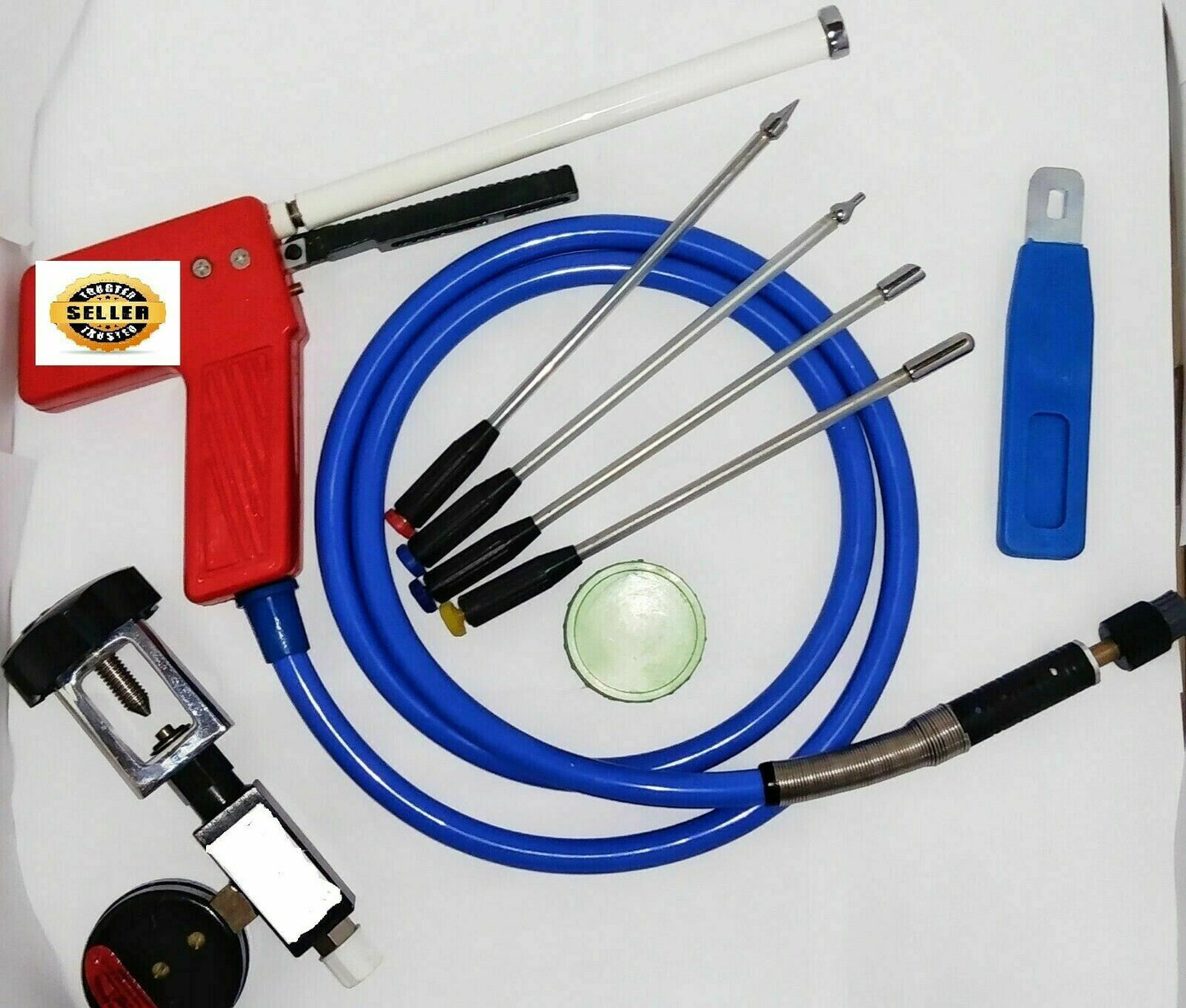
The SciMed Cryogun is a hand-operated nitrous oxide (N₂O) cryosurgical system for outpatient cryotherapy in gynecology, ENT (otorhinolaryngology), and dermatology. The 5-probe kit includes interchangeable probes designed for cervical, nasal, dermal, and general-surgery applications — a single instrument that covers multiple clinical specialties. Silencer-equipped, ABS-body, portable case included.
What is a cryogun?
A cryogun (also called a cryosurgical gun or cryotherapy gun) is a hand-held instrument that delivers cryogenic gas — typically nitrous oxide (N₂O) or carbon dioxide (CO₂) — to a specialized probe tip that freezes and destroys targeted tissue. The freeze-thaw cycle causes intracellular ice crystal formation, cell membrane rupture, and vascular occlusion, resulting in controlled tissue necrosis. Cryotherapy is used across gynecology (cervical dysplasia, CIN, cervicitis), dermatology (warts, actinic keratoses, benign lesions), and ENT (nasal polyps, chronic rhinitis).
Clinical applications by specialty
Gynecology / OB-GYN
- Benign chronic cervicitis
- Cervical dysplasia / CIN following cytology & biopsy
- Cervical erosion / ectropion
- Nabothian cysts
- Cervical / vaginal / vulvar warts (condyloma acuminata)
- Post-conization hemostasis
- Cervical polyps
Dermatology
- Common warts (verruca vulgaris)
- Plantar warts
- Actinic keratoses
- Seborrheic keratoses
- Molluscum contagiosum
- Small hemangiomas
- Superficial skin cancers (BCC/SCC — with margins)
ENT / Otorhinolaryngology
- Chronic hypertrophic rhinitis
- Nasal polyps
- Recurrent epistaxis (nasal bleeding)
- Laryngeal papillomas / polyps
- Granular pharyngitis
- Tonsillectomy adjunct
- Adenoid treatment
General surgery / Proctology
- Internal / external hemorrhoids (Grade I–III)
- Anal fissures
- Anal fistulas
- Benign rectal tumors
- Superficial skin ulcers
How the cryogun works
- Connect N₂O tank — attach the cryogun to a standard nitrous oxide cylinder via the supplied high-pressure connector
- Select probe — thread the appropriate probe onto the gun based on the target tissue (cervical, dermal, nasal, or general)
- Position probe on the target lesion under direct visualization (speculum for cervical, nasal speculum for ENT, dermoscopy for skin)
- Trigger gas release — squeeze the trigger to release N₂O to the probe tip. Probe temperature drops to approximately −89°C within seconds
- Freeze the target — maintain contact for 30–60 seconds until an ice ball forms extending 2–3 mm beyond the visible lesion margin
- Thaw — release trigger, allow tissue to thaw (typically 60–90 seconds)
- Repeat freeze-thaw cycle once more (double freeze-thaw is standard for cervical and dermal applications; single freeze for delicate tissues)
- Post-procedure care — no active bleeding management typically needed; instruct patient on expected healing timeline (2–4 weeks for cervical, 1–3 weeks for skin)
Why clinicians choose this cryogun
- Silencer-equipped — significantly reduces the loud gas-release hiss that concerns anxious patients (particularly pediatric ENT cases)
- Interchangeable probes — one instrument for cervical + dermatology + ENT means capital equipment cost stays low
- Hypodermic-needle-grade gas flow — smooth cryogenic delivery, longer probe life
- ABS ergonomic body — light, non-slip, easy to hold for the full freeze cycle
- Portable carry case — for outreach clinics, mobile OB-GYN services, and rural clinical training programs
- Compatible with standard N₂O cylinders — no proprietary gas required
Specification
| Cryogenic gas | Nitrous oxide (N₂O), compatible with CO₂ |
| Probes included | 5 interchangeable probes (specify tips at order) |
| Body material | Medical-grade ABS plastic |
| Operation | Hand-held trigger-operated |
| Noise attenuation | Integrated silencer |
| Working temperature | Approximately −89°C at probe tip |
| Gas connection | Standard high-pressure N₂O connector |
| Case | Portable carry case included |
| Intended user | OB-GYN, dermatology, ENT, general surgery clinics; outpatient surgery centers; teaching hospitals |
Available probe types (5 of your choice)
- Cervical / OB-GYN probes — flat conical, dome-shaped for cervical dysplasia
- Dermatology probes — small flat tips for warts and skin lesions of varying sizes
- Nasal / ENT probes — long thin tips for intranasal and pharyngeal access
- Anorectal probes — extended probes for hemorrhoid and fissure treatment
- Retinal / oral probes — specialty tips for niche applications
Specify which 5 probes you need at time of order or in the checkout notes. Contact clinic@scimedstore.com before ordering if unsure which probe set fits your specialty.
What's in the box
- 1 × Cryogun with silencer
- 5 × Interchangeable probes (of your specification)
- High-pressure connector for N₂O cylinder
- Spare washers
- Portable carrying case
- Instructions for use
Frequently asked questions
What gas does this cryogun use?
Nitrous oxide (N₂O) is the standard cryogenic gas. The cryogun is also compatible with carbon dioxide (CO₂) if you prefer. Both gases produce probe-tip temperatures around −89°C (N₂O) or −79°C (CO₂), sufficient for standard clinical cryotherapy.
Does the cryogun include the nitrous oxide tank?
No — the cryogun ships with the high-pressure connector but not the N₂O cylinder itself. You'll source the tank separately from a medical gas supplier. Standard hospital or dental-supply N₂O cylinders are compatible.
Can I use this cryogun for cervical erosion / cervicitis treatment?
Yes. Cervical cryotherapy for benign chronic cervicitis and cervical erosion (ectropion) is one of the most common gynecologic applications. Use the cervical probe with a double freeze-thaw cycle (30-60 sec freeze × 2). Follow your local OB-GYN protocol for pre-treatment cytology screening.
Is the cryogun FDA cleared for outpatient use?
Cryogun systems using standard N₂O cylinders are Class II medical devices under FDA cryosurgery instrumentation classification. Verify your specific unit's regulatory status with your compliance officer for state and facility-specific outpatient cryotherapy protocols.
What's the difference between N₂O and liquid nitrogen cryotherapy?
N₂O cryotherapy (this system) uses pressurized nitrous oxide gas at approximately −89°C — ideal for controlled, precise lesion targeting in office settings. Liquid nitrogen (LN₂) cryotherapy uses cryogen at −196°C — used with spray canisters or dip-stick applicators mainly for dermatology. N₂O offers more predictable freeze depth for cervical and ENT applications; LN₂ is faster but harder to control for delicate tissue.
How long does one N₂O tank last?
A standard 10 lb N₂O cylinder typically supports 30–50 cryotherapy procedures depending on freeze duration per case. Cervical cryotherapy uses more gas per session than dermatology.
What's the recovery time after cervical cryotherapy?
Standard patient guidance: watery vaginal discharge for 2–4 weeks (normal), no vaginal intercourse or tampons for 2–4 weeks, follow-up Pap smear at 3-6 months per your protocol. Refer patients to your standard post-cervical-cryotherapy handout.
Can I get a bulk cryogun order for a teaching hospital or clinic chain?
Yes. Email clinic@scimedstore.com for pricing on 3+ unit orders. Teaching hospitals and residency programs receive institutional pricing on training kits.
Also known as
Cryogun · cryosurgical gun · cryotherapy gun · N₂O cryogun · nitrous oxide cryogun · cervical cryogun · cervical cryotherapy gun · OB-GYN cryogun · dermatology cryogun · ENT cryogun
For clinic procurement, hospital orders, teaching-hospital training kits, or international NGO cryotherapy programs, contact clinic@scimedstore.com or (669) 265-9353.
Share