SciMed
20D Aspheric Lens + 4-Mirror Gonioscope Bundle — 4 Lenses Each, BIO + Glaucoma Diagnostic Kit
20D Aspheric Lens + 4-Mirror Gonioscope Bundle — 4 Lenses Each, BIO + Glaucoma Diagnostic Kit
Couldn't load pickup availability
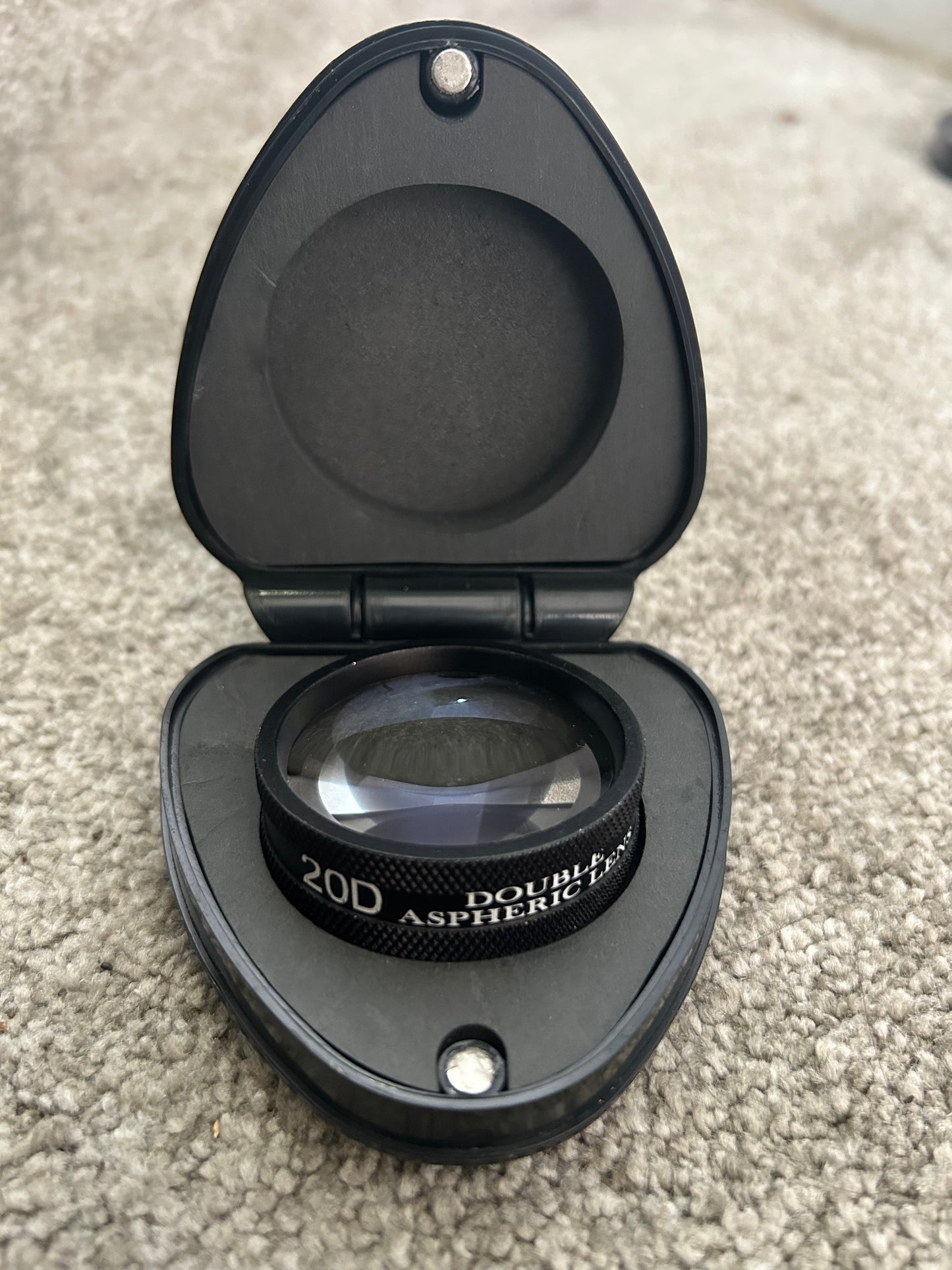
Value bundle: 4 pieces of 20D Double Aspheric Lens + 4 pieces of 4-Mirror Gonioscope Lens — the complete ophthalmic diagnostic lens set covering BIO (binocular indirect ophthalmoscopy) retinal exam AND anterior chamber angle assessment (gonioscopy) for glaucoma workup. Multi-lens quantity supports teaching programs + multi-lane clinical practices + specialty rotation training + spare lenses for high-drop-risk workflows. $360 for 8 total lenses = $45 per lens, versus $150-$300/lens sold individually. Anti-reflection multi-coated, protective cases for each lens.
Bundle contents
| Lens | Qty | Purpose |
|---|---|---|
| 20D Double Aspheric Lens | 4 | Binocular Indirect Ophthalmoscopy (BIO) — retinal + posterior segment examination. Standard workhorse for retinal periphery, diabetic retinopathy screening, retinal detachment screening. |
| 4-Mirror Gonioscope Lens | 4 | Anterior chamber angle examination for glaucoma workup — direct visualization of angle structures (Schwalbe's line, trabecular meshwork, scleral spur, ciliary body band). Standard for gonioscopy in glaucoma + narrow-angle screening. |
Clinical applications
20D lens (BIO retinal exam):
- Retinal periphery examination — retinal detachment, retinal tear, lattice degeneration
- Diabetic retinopathy screening + management
- Age-related macular degeneration (AMD) monitoring
- Retinal vascular disease — retinal artery/vein occlusion
- Post-cataract retinal exam
- Neonatal retinal exam (ROP screening)
- Trauma-related retinal exam
4-Mirror Gonioscope lens (anterior chamber angle):
- Primary open-angle glaucoma workup — angle grading (Shaffer / Spaeth)
- Angle-closure glaucoma screening + treatment planning
- Pigmentary glaucoma workup — trabecular pigment assessment
- Pseudoexfoliative glaucoma — angle structures + PXF deposits
- Post-cataract intraocular lens position assessment
- Neovascular glaucoma — angle neovessel identification
- Uveitic glaucoma — angle inflammation + synechiae
Why buy the bundle vs individual lenses
- Teaching program stocking: optometry / ophthalmology residency programs need 4-6 lenses per lens type for student rotation — bundle covers this at institutional pricing
- Multi-lane clinical practices: 3-4 exam room build-out where each lane needs its own lens set
- Spare + backup coverage: lens drops during clinical use are common; having a spare prevents lost clinical time
- Cost savings: $360 bundle = $45/lens vs $150-$300/lens individually
- Practice fellowship training: multiple learners can practice simultaneously without lens contention
Best for
- University optometry + ophthalmology teaching programs
- Ophthalmology residency + fellowship rotations
- Multi-lane clinical practices (retina + glaucoma specialties)
- Community eye clinics + rural outreach programs
- Cataract + eye camps (NGO — Aravind / L V Prasad / Orbis style)
- International eye clinics via DDP (India, GCC, LATAM, SE Asia)
Buying for a program or multi-lane practice?
- Volume pricing on 3+ bundles — university teaching programs + multi-clinic + NGO
- Net-30 invoicing for verified optometry / ophthalmology / academic accounts
- SAM.gov / VA compliant procurement
- Full 20D + 78D + 90D + 28D pack available separately if you need all four BIO lens types
- Individual 20D lens or 4-mirror gonioscope also available separately
- International DDP shipping — huge eye care markets in India, LATAM, MENA, SE Asia
- NGO cataract camp pricing on 5+ bundle orders
FAQ
Why this bundle vs individual lens purchase?
$360 for 8 lenses = $45/lens vs $150-$300/lens sold individually. Ideal for teaching programs + multi-lane clinics needing coverage across specialties + workflows. Provides both BIO retinal exam capability (20D) and glaucoma angle exam capability (4-mirror) in one purchase.
Is 20D the right power for my BIO workflow?
20D is the workhorse BIO lens for adult retinal exam — most retinal specialists use 20D as primary. For pediatric BIO, 28D provides better working distance. For high-magnification retinal detail, 90D or 78D via slit lamp is preferred. For diabetic retinopathy screening, 20D + 90D combination is standard.
What does 4-mirror mean on the gonioscope?
4-mirror gonioscope has 4 angled mirrors around the central lens periphery, giving 90° views of the anterior chamber angle from 4 quadrants simultaneously. This is the standard modern configuration (vs older 1-mirror or 3-mirror Goldmann designs). Better efficiency for glaucoma workup — one lens position shows all 4 angle quadrants.
Are these OEM or aftermarket lenses?
These are SciMed lenses (India-manufactured) — same optical performance class as Volk / Ocular Instruments premium OEMs at 25-40% of premium pricing. Anti-reflection multi-coated optics, protective cases, 1-year warranty.
Share